Chapter 10
Subsections of English
From the heart
In the year 1985, I stayed as “antevasi” at the home of our guru, Brahmashree Oruganti Nilakantha Sastri garu, in Krishna Nagar, Guntur, for about a month. During that period I learned many relevant things, and was also blessed to receive Mantra Diksha from him. He would do trikala sandhyavandana parayana. One day he showed me an old booklet on “Sarva varṇulaku Sandhyopasana” - Sandhyopasana to people of all varnas, without distinction between men and women, and said that women are also eligible to perform sandyopasana. The book, published in 1953, also contained information related to Sriyagam according to our tradition of Sri Kalyanananda Bharati.
Later, Brahmashree Nori Subrahmanya Shastri, who also belongs to our tradition, printed and distributed 1500 copies of that book on behalf of their trust in 2012, on Sricharanula birthday.
Kalyana Sricharanulu is my parama guru. Taking it as an instruction of Jagadguru, keeping his selfless desire of universal welfare as dictum, and applying it to the current world scenario, “Saṃdhyāvaṃdanaṃ to all” is being presented to you. I hope everyone will be able to understand this properly and get Guru’s blessings.
Chapter 10
Introduction
This book ‘Saṃdhyāvandana for all’ is meant and written for all who follow Sananata Dharma. In common practice Saṃdhyāvaṃdanaṃ seems to be prescribed only to some of the Trivarṇikas. If you think philosophically, you will realize that everyone is eligible for Saṃdhyāvaṃdanaṃ or Saṃdhyopāsana. Let us discuss it a bit.
Subsections of Introduction
What is Sandhyavandana?
The word ‘Saṃdhyāvandanaṃ’ is a combination of two words - ‘Sandhya’ and ‘Vandanaṃ’.
‘Samyak dhyāyanti asyām iti sandhyā ’ (सम्यक् ध्यायन्ति अस्यां इति संध्या) - means a suitable time to do ‘dhyānaṃ /meditation properly.
‘vaṃdanaṃ - वन्दनम् - means salutation. ‘नमस्कारः - NamaskāraH’ is defined as the act of taking refuge in a great divine personality with folded hands.
Also, Saṃdhyāvaṃdanaṃ can be broadly described as worshiping our favorite deity in an appropriate time of the day with the feeling of unflinching devotion (Ananya Bhakti).
Right from morning when we wake up and open our eyes until we sleep at the end of the day, it is the living god ‘Sun’ who tirelessly bestows us with liveliness, agility, good health. Hence, our erudite scholars and ṛiṣis (ऋषि) advised and instructed all to worship Sun daily during ‘Saṃdhya’ times to attain salvation. They further added that doing so is our duty as a token of respect for getting the human life.
Who can do?
It is natural for an average person to get the doubt who are eligible to do Saṃdhyopāsana. The answer is simple. Everyone can do without any objection. This book emphasizes the same. In śabda kalpadrumaṃ (शब्दकल्पद्रुम) there is a mention of mantra updadeshams of Gayatri, Savitri and others, mauṃjī (the sacred thread worn by boys at the time of upanayanam) baṃdhanaṃ, and similar reforms/cultures which were also preached to women as saṃdhyāṃgas in the past as mentioned below –
स्त्रीशूद्रादीनां वैदिक्याः स्थाने तांत्रिकी संध्या उपदिष्टा स्त्रीणामपि संध्याधिकारः स्मर्यते वाल्मीकिना
strIshUdrAdInAM vaidikyAH sthAne tAMtrikI saMdhyA upadiShTA strINAmapi saMdhyAdhikAraH smaryate vAlmIkinA-
संध्याकालमनाः श्यामा ध्रुवमेष्यति जानकी।
नदीं चेमां शुभजलां संध्यार्थे वरवर्णिनी॥
saMdhyAkAlamanAH shyAmA dhruvameShyati jAnakI|
nadIM chemAM shubhajalAM saMdhyArthe varavarNinI||
Tāṃtrik Saṃdhyopāsana worship was instructed to women and śūdrās instead of Vedic Saṃdhyopāsana. One should not mistaken it for occult worship.
Valmiki Maharishi prescribed these types of worship for them as mentioned clearly in the sacred scripture Ramayan.
This was illustrated by Hanuman’s thoughts when he saw waters in a sacred river while searching for Mother Jaanaki in Lanka, “I shall wait here since Maa Sita would definitely come to this sacred river for Saṃdhyopāsana”.
How to visualize the Sun
No one will have a different opinion or objection to the fact that Sun, a deity manifested with all his effulgence, is a living deity/god for all humanity. Nature’s cycle depends on his radiance. Moreover, he is giving all these FREE OF COST. If we want to take refuge in Him, we should only salute and bow to him with unwavering, unalloyed devotion during the twilight (saṃdhyā) hours. Technically, this salutation is called as ‘Saṃdhyāvaṃdanaṃ’ or ‘Saṃdhyopāsana’.
Everyone wants to live comfortably and enjoy all kinds of wealth and happiness. Surya Bhagavan is the visible, livid God who gives us such a beautiful life, absorbs us in him even at the time of death, and gives everlasting salvation (sāyujja mukti). He is the ocean of compassion that preserves all living beings by continuously imparting light, consciousness, inspiration, health, and happiness to everyone, regardless of whether or not one pays obeisance to him!
He (Sun) rises daily and appears as Bālabhānu radiating golden rays in the morning, as Pracaṃḍa mārtāṃḍuḍu (प्रचंड मार्तांडुडु) in the afternoon, and sets with golden rays again in the evening. Thus, as long as we are awake to carry out our daily activities, it is Lord Āditya (Sun) who protects us like a trust-worthy friend. That’s why the first of his 12 names with which we glorify him is ‘Mitra’ (friend). Śṛuti (शृति), the sacred text Vedaṃ, euologises, glorifies Sun as ‘Sūrya ātmā jagata:’ (सूर्य आत्मा जगत:) – the Ātmasvarūpa who rules both the outer and inner worlds, the macrocosm and the microcosm.
Surya Darshanam & Saṃdarśanaṃ (How to understand Sun)
The way Sun wanders in the vast universe, if we define the word ‘sandhya’ (twilight) as a suitable time for dhyānaṃ (meditation), then in the inner world of thought (bhāvanā prapaṃcamu) in Daharākāśamu (the ethereal space in the heart), Sun would give darshan as ‘Cidbhānu (चिद्भानु) ’ and Jñāna Bhāskara (ज्ञान भास्कर), and bestows wisdom, knowledge and salvation along with heath, wealth and good life. One should strive to get this kind of Surya darshan since it is the ultimate highest truth (paramārthaṃ) a person has to attain through upasana in order to realise the value of getting human life, which is a rare fortune for a soul. This is Surya Saṃdarśanaṃ!! This is termed as ‘Saṃdhyāvaṃdanaṃ’ or ‘Saṃdhyopāsana’! That is why our sages have ordered that one should do Saṃdhyāvaṃdanaṃ daily throughout his life without fail - ahāraha saṃdhyāmupāsīta (अहारह संध्यामुपासीत).
The real purpose
The highest truth and real purpose of Saṃdhyāvaṃdanam (Saṃdhyāvaṃdana paramārthaṃ)
So far, we have discussed that Saṃdhyāvaṃdanaṃ means doing Suryopāsana at the right time of dawn, mid-day and dusk. We have also learnt a little bit about the sun and understood that all are eligible to worship and meditate on the living manifestion of God, the Surya Bhagavan. However, one should not rush at doing it without proper understanding. Vedic science says, “Jñātvā karmāṇi kurvīta’ (ज्ञात्वा कर्माणि कुर्वीत)” - means any work should be done only after obtaining complete knowledge or wisdom of it.
Śrī Ādi Śaṃkarācārya in his bhāṣyaṃ on Bhagavadgīta, defines Upāsana as follows:
'Upāsanaṃ nāma yathā śāstramupāsyasya arthanya viṣayī karaṇena sāmīpyamuvagamya taila dhārāvat samāna pratyaya pravāheṇa dīrghakālaṃ yadāsanaṃ tadupāsana mācakṣate- (Gītābhāṣyaṃ2/3)
‘उपासनं नाम यथा शास्त्रमुपास्यस्य अर्थन्य विषयी करणेन सामीप्यमुवगम्य तैल धारावत् समान प्रत्यय प्रवाहेण दीर्घकालं यदासनं तदुपासन माचक्षते- (गीताभाष्यं2/3)
Meaning: Upasana is to approach the worshipable aspect (God) in accordance with procedure described in Śāstrās and meditate upon it continuously to the best of one’s capacity.
Saṃdhyāvaṃdanaṃ may be labeld as ‘The Effort’ we put daily with profound dedication and devotion to reach this stage. This is not at all a difficult task; one needs to spend about 15-20 min each at dawn, mid-day, and dusk. Spending about an hour in a 24-hour cycle will bring great result - Peace of mind. Subsequently, we understand empirically (through observation and experience) that it is nothing but universal welfare (viśva kaḻyāṇaṃ).
What will you get if you do it daily?
Our sages have ordered that one should do Saṃdhyāvaṃdanaṃ daily throughout his life without fail - ahāraha saṃdhyāmupāsīta (अहारह संध्यामुपासीत) - means one must perform Saṃdhyāvaṃdanaṃ during three Saṃdhyās, dawn, mid-day, and dusk. What will I get if I do it or what will I lose if I don’t do? If we know the answers, we can decide ourselves whether or not to do Saṃdhyāvaṃdanaṃ or not.
Prakṛti khaṃḍaṃ in Brahma vaivarta purāṇaṃ says -
Yāvajjīvanaparyaṃtaṃ yastrisaṃdhyaṃ karoti ca|
sa ca sūryasamo vipraḥ tejasā tapasā sadā॥
Tatpādapadmarajasā sadyaḥ pūtā vasuṃdharā|
jīvanmuktaḥ sa tejasvī saṃdhyāpūto hi dvijaḥ ॥
Tīrthāni ca pavitrāṇi tasya sparśanamātrataḥ।
tataḥ pāpāni yāṃtyeva vainateyādivoragāḥ ॥
यावज्जीवनपर्यंतं यस्त्रिसंध्यं करोति च|
स च सूर्यसमो विप्रः तेजसा तपसा सदा॥
तत्पादपद्मरजसा सद्यः पूता वसुंधरा|
जीवन्मुक्तः स तेजस्वी संध्यापूतो हि द्विजः ॥
तीर्थानि च पवित्राणि तस्य स्पर्शनमात्रतः।
ततः पापानि यांत्येव वैनतेयादिवोरगाः ॥
Meaning: That is, a person who does Saṃdhyāvaṃdanaṃ three times daily throughout his life will glow like a Brahmin who is equivalent to Sun in his brilliance, splendour and penance, i.e. he glows with Brahmatejas (ब्रह्मतेजः). Vasuṃdhara Bhūdevi (Earth’s names) gets sanctified the moment dust particles from his feet touches her. Saṃdhyopāsana makes him utmost pure, sacred and bec. Such a dvijanma Brahman (a Brahman is called as ‘dvijanmuḍu’ after upanayanam) will get liberated from existing state of life while being alive (jīvanmukti) and radiates with brilliance. By his mere touch, i.e., the very moment of his touch, the holy rivers such as Ganga become holier. The way as snakes run away in fear at the sight of Garuda (king of birds), all sins vanish the moment he is seen. Saṃdhyāvaṃdanaṃ is so powerful!
Thus, we can reap the fruits of prosperity, and get brilliance, radiance, effulgence equivalent to that of Sun god by spending just an hour in a 24-hour day.
Hence, suggesting that it is our duty to perform Saṃdhyopāsana to make our human birth meaningful and fruitful, I have attempted to bring this book in line with the tradition and principles laid down by our Rishis based on the knowledge I aquired from the blessings of my gurus.
What times of the day you should do it?
Earlier we described ‘Saṃdhyā’ as ‘Samyak dhyāyaṃti syāmiti saṃdhyā ’ (सम्यक् ध्याय़न्ति अस्याम् इति संध्या) - meaning a suitable time to do ‘dhyānaṃ /meditation properly.
Dakṣasmṛti (दक्षस्मृति) mentions that philosophers and sages gave simpler description for Saṃdhya as -
‘Ahorātrasya yassaṃdhi: sūryanakṣatravarjita: |
sā ca saṃdhyā samākhyātā munibhistattva vādibhi:॥
अहोरात्रस्य यस्संधिः सूर्यनक्षत्रवर्जितः |
सा च संध्या समाख्याता मुनिभिस्तत्त्व वादिभिः॥
- the intervening period (saṃdhi kāla) bewtween day and night when there is neither Sun nor stars.
Dakṣasmṛti elaborates that -
saṃdhau saṃdhyāmupāsīta nāstage nodite ravā
संधौ संध्यामुपासीत नास्तगे नोदिते रवा
- morning Saṃdhya (prāta: saṃdhya) should be worshiped before sunrise and evening Saṃdhya (sāyaṃ saṃdhya) should be worshiped during sunset.
Further it gave a much more wonderful, worshipable shape to Samdhya -
Gāyatrīnāma pūrvā sāvitrī madhyame dine |
sarasvatī ca sāyāhne saiva saṃdhyā triṣu smṛtā॥
गायत्रीनाम पूर्वा सावित्री मध्यमे दिने |
सरस्वती च सायाह्ने सैव संध्या त्रिषु स्मृता॥
- it states that the Samdhya form is called as “Gāyatrī ” in the morning, “Sāyatrī ” in the afternoon, and “Saraswatī” in the evening. This is said with reference to Śākta sampradaya. It must be understood that they conceive the power of the sun deity in that way.
Some sages and philosophers perceived that:
- The rising sun as brahma Swarupa (due to his rise in Brahma muhurtha), and the associated samdhya shakti (Brāhmishakti) as Saraswati,
- The mid-day Sun as Rudra, and the associated Bhargatejassu as Rudrani,
- The evening Sun as Vishnu, and associated shakti as Vaishnavi and attributed respective names.
Thus, in samdhyopasana, one should understand and worship the Sun along with his native forms of energy in respective samdhyas.
Sanatana practices
Universe (Brahmāṃḍaṃ) and each living creature (Piṃḍāṃḍaṃ) look different but both are gross and subtle bodies of Sun, the Karma sākshi aṃtaryāmi! For both, he is glorified as the soul - " sūrya ātmā jagatastasthuṣaśca (सूर्य आत्मा जगतस्तस्थुषश्च)". No matter what kind of deformity or ailment (disease) occurs in the body, it is Surya who is the healer who protects us and drives us all the way. That’s why our great sages prescribed and ordered that Surya upasayana must be done daily at samdhya time ‘aharaha-ssaṃdhyā-mupāsīta’ (‘अहरह स्संध्या मुपासीत’).
This is the welfare message preached by Jagadguru in line with our Sanatana dharma followed by Rishis and Veda sāmpradaya. A boy who receives upanayana samskāram at a tender age of 5-years, does Saṃdhyopāsana three times every day, expresses his desire for universal welfare and peace in the world with the hymn - ’ lokā ssamastā: sukhino bhavaṃtu! Oṃ śāṃti śśāṃti śśāṃti: (लोकास्समस्ताः सुखिनो भवंतु! ओं शांतिश्शांतिश्शांतिः)’. Even today one can find such brahmachari in orthodox Brahmin families. It is our responsibility to preserve such sacred tradition to which we belong.
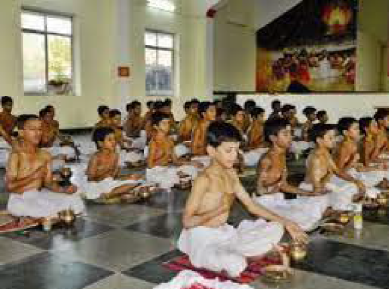
Young brahmacharis (vaṭuvu) learning samdhyopasana from elders with discipline.
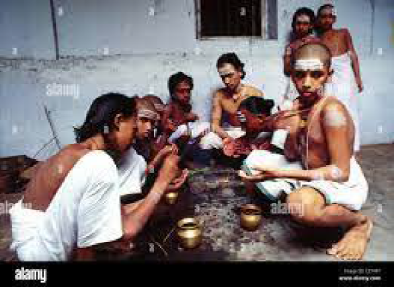
They study with devotion, memorizing the education imparted to them.
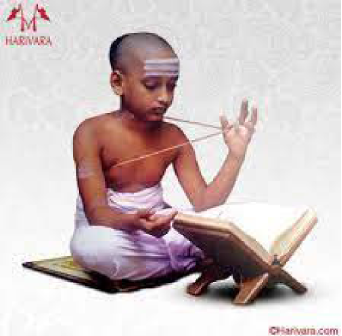
They practice what they have learned in the form of worship every day.
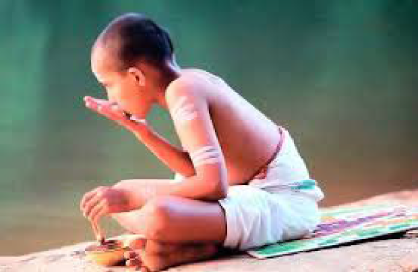
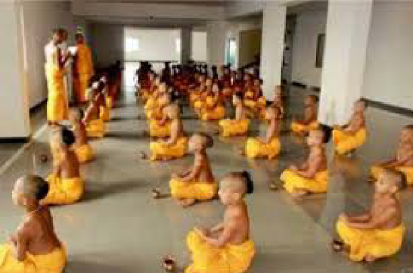
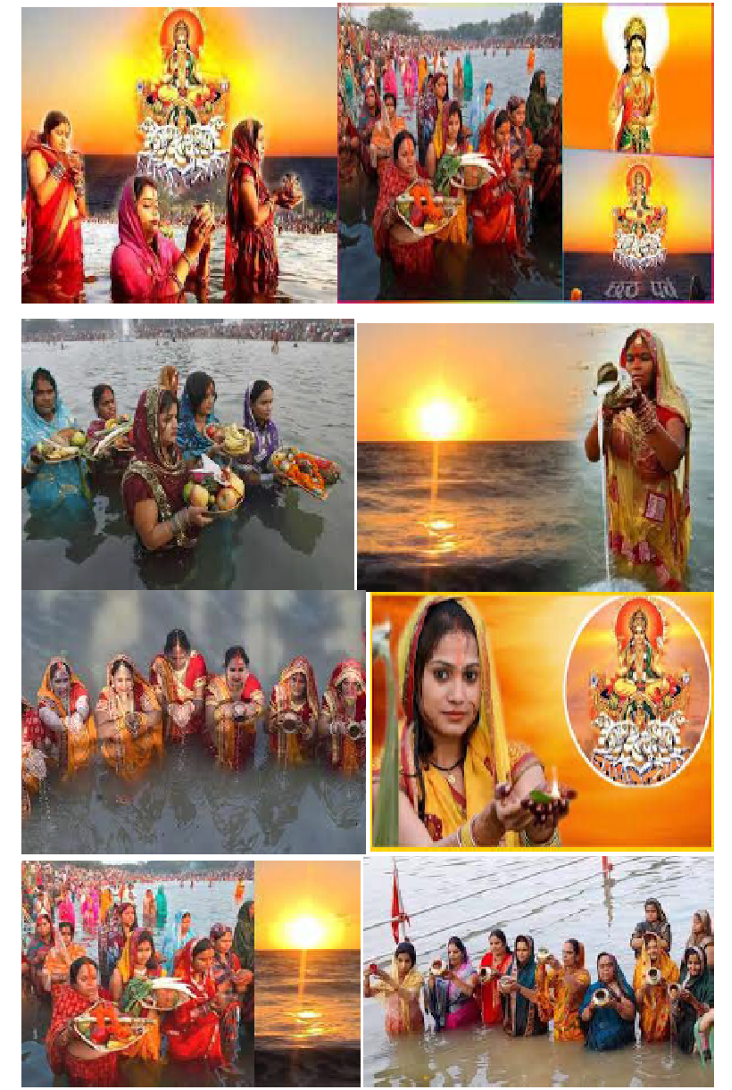
In North India, women perform Surya Vrat for soubhaagyam (prosperity in all walks of life).
Maha Sankalpa
Mahā saṃkalpaṃ - means great /ultimate resolution.
Everyone in the world should be good, and there should not be evil doers. If one questions whether it is this possible, the answer would be an ‘Yes’. Whenever we see evil in our nature or elsewhere, we should try to turn away from it. Also, we should try our best to change the bad or evil that we see around us into good. This practice should be done continuously without giving up. The best effort in this direction is doing Samdyhopāsana three times a day without fail. Each and everyone can do it. We should make a resolution ourself seeking world peace and universal welfare. This is the Great resolution we must undertake!
This creates goodwill amongst all. In turn it gives us, the doer, peace of mind. In a society where people have peace of mind, happiness and prosperity will prevail. Then such happy souls will be able to transcend their sorrows and try to make others free from sorrows.
Durjana: sajjano bhūyāt-sajjana: śāṃtimāpnuyāt|
śāṃto mucyeta baṃdhebhya:- muktaścānyānvimocayet ॥
दुर्जनः सज्जनो भूयात्-सज्जनः शांतिमाप्नुयात्|
शांतो मुच्येत बंधेभ्यः- मुक्तश्चान्यान्विमोचयेत्।।
Meaning:
That all the wicked should becomes righteous, the righteous should get peace, and in turn eternal salvation. Those who attain such liberation should lead the the rest of people. This is the quitessential (सर्वोत्कृष्ट) message of Samdhyopāsana!
Saṃdhyāvaṃdanaṃ is for the welfare (sugati सुगति) of all
We belong to the lineage of Maharshis. A Rishi is the one, who, in his state of deep introspection (aṃtarmukha अंतर्मुख) and penace, awakens and activates the power of dormant soul within him. In that state he visits the universe in his mental place, achieves self-realisation and liberates himself. On the other hand, a Maharshi, with his enlighted soul, treats all as his close companions, and strives to uplift them all the time. We still think we belong to the lineage of such sages. This is something we should be proud of.
Sarve bhavaṃtu sukhinaḥ saṃtu sarve saṃtu nirāmayā:|
sarve bhadrāṇi paśyaṃtu mākaścid duḥkhamāpnuyāt॥
सर्वे भवंतु सुखिनः संतु सर्वे संतु निरामयाः|
सर्वे भद्राणि पश्यंतु माकश्चिद् दुःखमाप्नुयात् ॥
Meaning: Everyone should be happy, comfortable and healthy. Should always be able to visit auspicious things without suffering!
Saṃdhyāvaṃdanam is very easy to perform, not an impossible task
I have observed Shrotriya families, where children at a tender age of 2-3 years imitate the elders who hold the paṃcapātra (a copper glass used to hold water), uddhariṇa (copper spoon) and plate and do Saṃdhyāvaṃdanam. At the age of 5 to 10 years, many children get sacred thread ceremony done (Upanayanam) and perform Sahasragayatri Mantra. If not, with encouragement from parents’ children will definitely learn and do. But, we, the elders, are not doing our duty. Moreover, in the name of kuhana secularism, we have stopped teaching our prayers and their importance. This is our misfortune!
People from other religions are adopting our traditions and implementing them as their children’s education programs. Christians turned SUNDAY as their PRAYER DAY and go to church along with family. Not only do they set aside prayer times in their schools, but they also write keep hoardings to emphasize that God will surely listen to their prayers! Muslims perform vandanam (namāz prayer) without fail during samdhya periods. Please look at these images-


Restoring the glory
Etaddeśapranūtanya sakāśādagrajanmana: ।
Svaṃ svaṃ caritraṃ śikṣeran pṛthivyāṃ sarvamānavā:
एतद्देशप्रनूतन्य सकाशादग्रजन्मनः ।
स्वं स्वं चरित्रं शिक्षेरन् पृथिव्यां सर्वमानवाः (Manu2.20)
From a boy born in the lineage of sages in this country Bhārat, all the humanbeings on other parts of earth should receive necessary (ideal), historical, and character training. “An Indian should always be on the highest pedestal, the place of Jagadguru” says one of the principles (Sutras) of Manu Dharma.
Every citizen of India should take the responsibility to uphold this principle and protect the cultural heritage of our country. Hence this effort. This book “Saṃdhyāvaṃdanamu for All” which may be called as “Śrīpādukā Saṃdhyākalpamu” is presented to you as an authentic work that can be practised in just 15 minutes per session. It is composed in a standard format to be practised by all mankind, without caste, creedm racem religion, gender and age bias.
In this book, the procedure of Samdhyopasana is mentioned in brief for ease of implementation. Accordingly, readers can follow it properly. Those who want to know further details may approach expert scholars and philosophers.
Chapter 20
Sripaduka Sandhyakalpam
Subsections of Sripaduka Sandhyakalpam
Materials needed
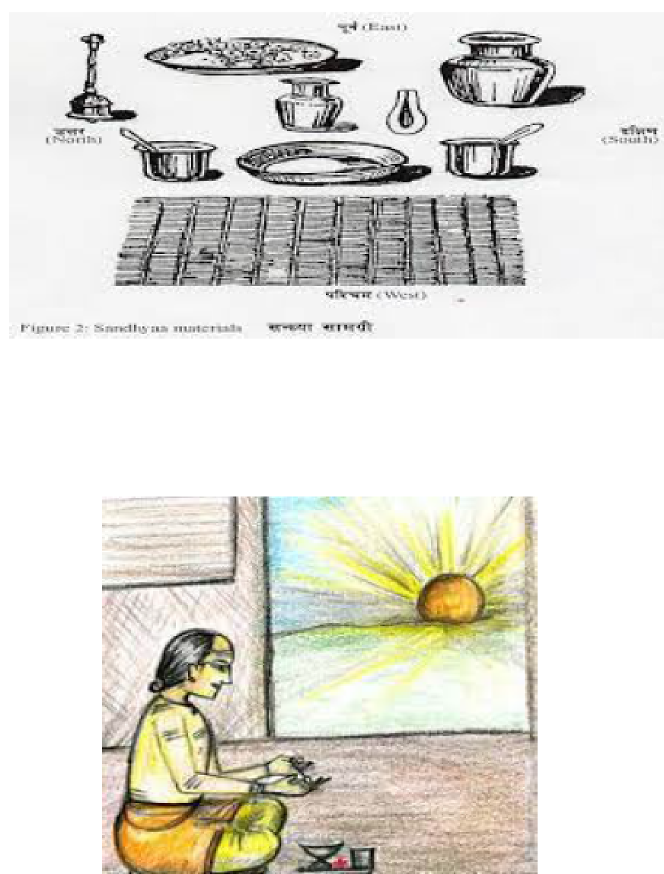
- Plank or Sukhāsana
- clean clothes
- paṃcapātra (a glass, preferably made of copper, used to hold water),
- uddhariṇa (spoon)
- hariveṇamu (plate)
- small pot filled water fetched sacredly
- flowers
- bell
Chapter 10
Morning
Wake up before sunrise, complete morning routine, wear clean traditional clothes and tilak on forehead.
Draw a triangle with a dot in its centre with water, pay obeisance with folded hands, put the plank (Sukhāsana) on the triangle drawn.
Sit on it facing east in the pooja room or an appropriate place and keep the mind calm and quiet.
Subsections of Morning
Sankalpa
Achamana
Tattwa achamana
Smarta achamana
GhantaaNada
Sandhya achamana
Surya Dhyana
TarpaNas
Japa
Devapitru Namaskaras
Digdevata Namaskaras
Swasti namaskara
Chant “(deśakālādikaṃ saṃkīrtya) mama upātta samasta duritakṣayadvārā śrīparameśvara prītyarthaṃ tadvārā mama sarvābhīṣṭasiddhyardhaṃ, lokakalyāṇārdhaṃ, viśvaśāṃtyarthaṃ ca prātassaṃdhyāmupāsiṣye” (देशकालादिकं संकीर्त्य) मम उपात्त समस्त दुरितक्षयद्वारा श्रीपरमेश्वर प्रीत्यर्थं तद्वारा मम सर्वाभीष्टसिद्ध्यर्धं, लोककल्याणार्धं, विश्वशांत्यर्थं च प्रातस्संध्यामुपासिष्ये and touch the water in the paṃcapātra with the right hand.
- Put a flower in paṃcapātra.
- Recite the words, “puṃḍarīkākṣāya nama: puṃḍarīkākṣāya nama: (पुंडरीकाक्षाय नमः पुंडरीकाक्षाय नमः), and
- Sprinkle few drops of water on the head with the flower in the panchapatra two times.
By sprinkling water twice like this on the body, both internal and external sanctity prevail.
Chant “Śrī mahāgaṇādhipataye nama: śrīgurubhyonama: श्रीमहागणाधिपतयेनमः- श्रीगुरुभ्योनमः” and offer namaskāram to Lord Ganapati and guru.
Chapter 20
Afternoon
Chapter 30